The Christmas season in Spain is a time of rich tradition, celebration, and deep connection with family and friends. The season spans from Christmas Eve through the Epiphany on January 6th. Arguably the most important part of the holiday season is food. Our resident Spaniard, Abogado Guillermo Iso, has filled us in on the juicy details of Spain’s most well-loved Christmas delicacies.
Traditional Christmas Meals in Spain
Spanish holiday cuisine is regionally diverse, but certain dishes are staples of the festive period.
Starters and Appetizers
Meals often begin with a warm dish. A common choice is a consommé of chicken broth, sometimes fortified with sherry wine. In Catalonia, the traditional starter is sopa de galets, a light broth featuring large shell pasta. A unique regional tradition in Aragon is cardo con pasas y piñones (cardoon in a bechamel sauce with pine nuts and raisins), a culinary custom shared with parts of Italy since Roman times.
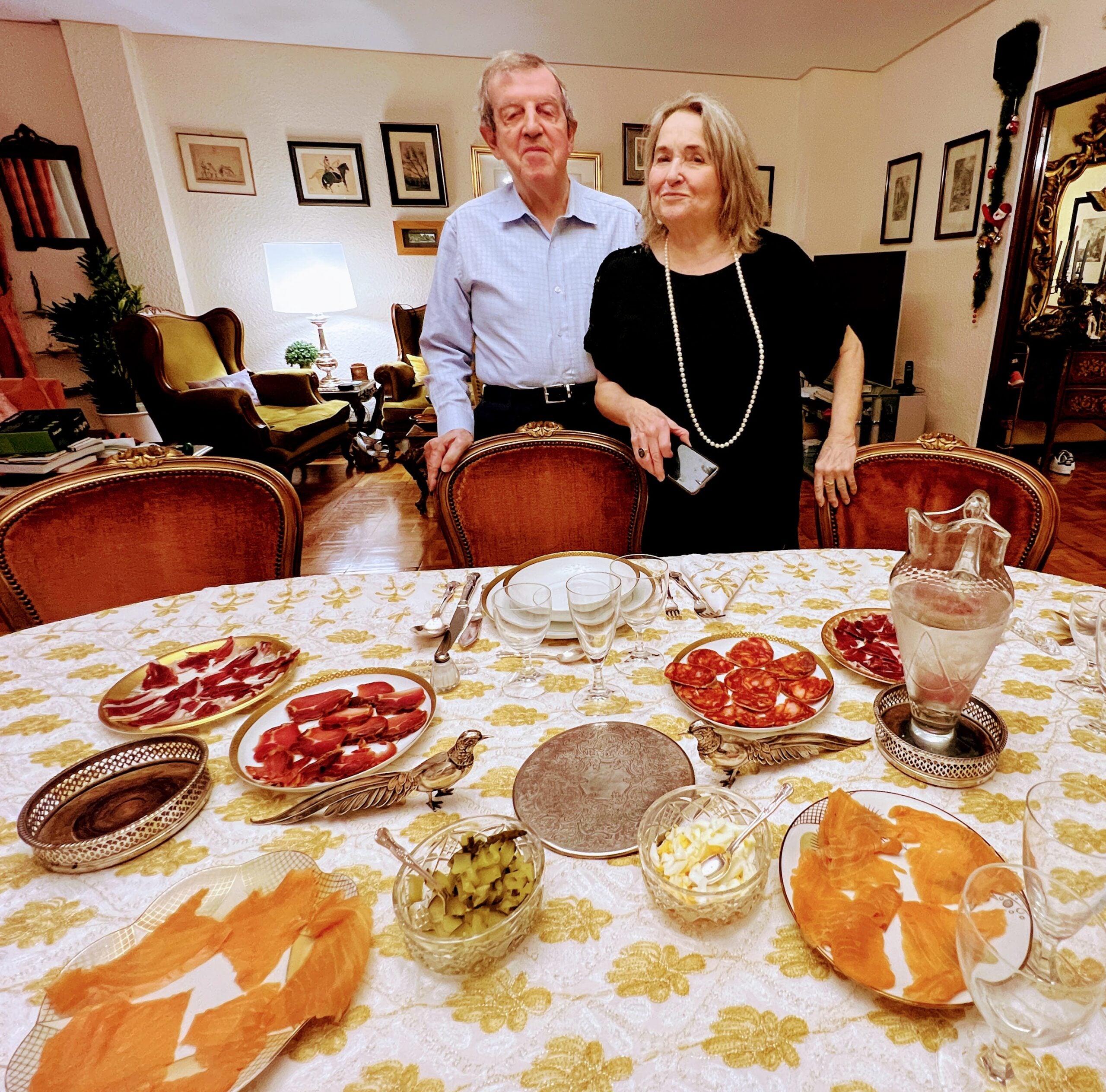
These starters are frequently followed by a selection of seafood, or a cold cut platter featuring delicacies like jamón ibérico, lomo (cured pork shoulder with paprika), and various salamis.
Main Course
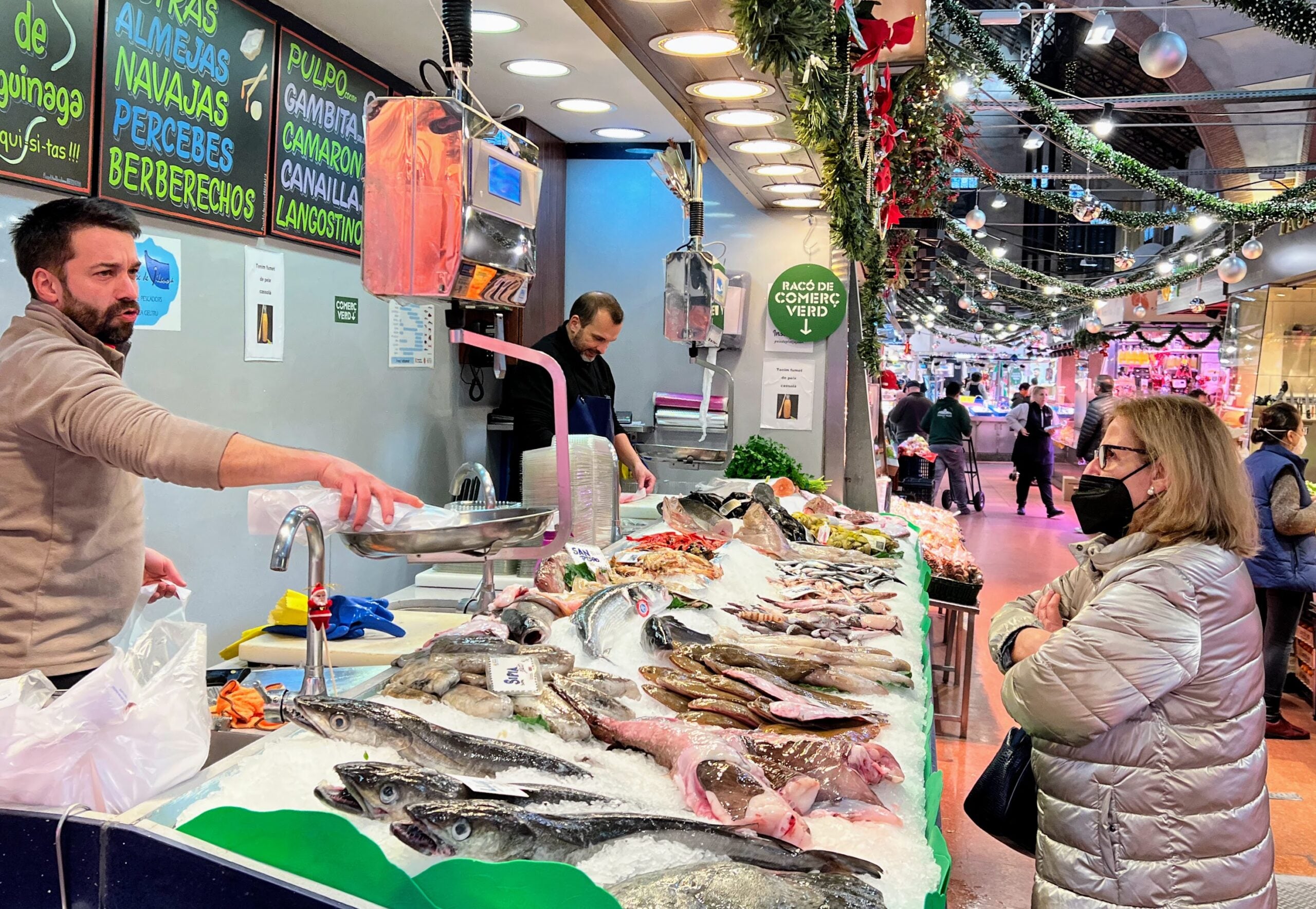
The main course typically centers on roasted meats, such as roasted, stuffed turkey, roast lamb, or suckling pig (piglet roast). Given Spain’s geography, fish is also a popular main dish, including fish stews made with monkfish or hake, and whole roasted fish like sea bream or sea bass from the local market, of course.
Desserts
The dessert course is defined by traditional almond-based sweets:
-
Turrón: Almond nougat, which is either hard (Turrón de Alicante) or soft (Turrón de Xixona).
-
Mazapán: Delicate marzipan confections.
-
Almond Cookies: Various small baked goods, including polvorones and mantecados.
Christmas Markets
Christmas markets typically operate from late November or early December until January 6th or 7th. They offer a place to purchase holiday goods, decorations, and seasonal food.
Notable Market Locations Include:
-
Plaza Mayor in Madrid (historical center)
-
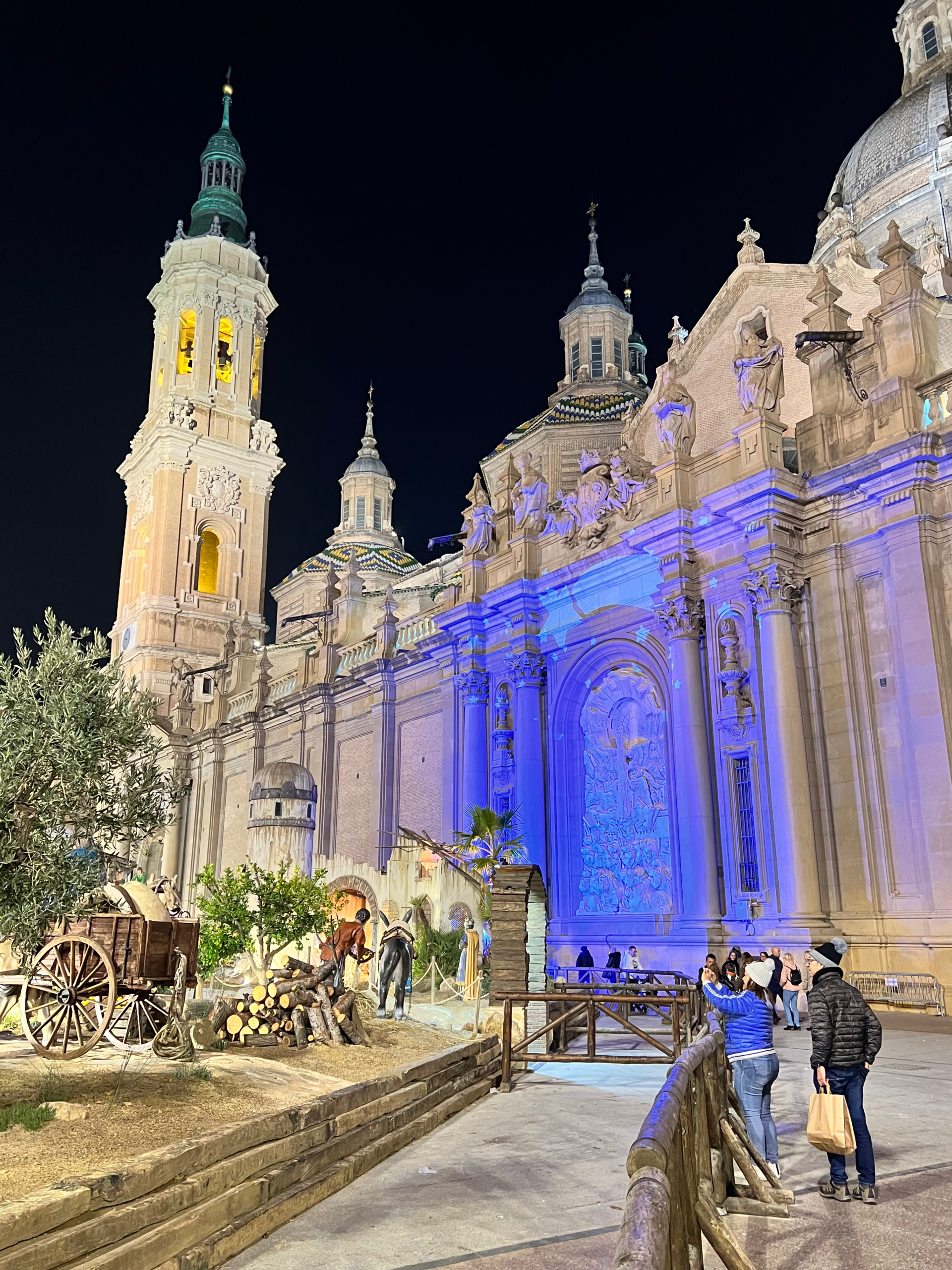
Plaza del Pilar in Zaragoza (by the Basilica del Pilar)
-
Fira de Santa Llúcia in Barcelona (Gothic Quarter near the Cathedral)
-
Artisans Market in Seville
-
Christmas Market in Granada by Bib Rambla
-
Mercadillo navideño of Alicante by La Explanada
-
Cíes Market of Vigo in Galicia (Vigo is known for its extensive lighting displays)
Decorations and the Nativity Scene
While Christmas trees were incorporated as a modern adaptation beginning in the late 1960s, the most traditional and important Spanish decoration is the Belén or Nativity scene. This tradition originated from Neapolitan nativity scenes and was introduced to Spain through the Crown of Aragon and Spanish viceroys in Naples. Many homes, especially those with children, create elaborate Nativity scenes, and schools and communities often hold contests for the best Belén.
Key Festivals and Gift Giving
The festive period generally runs from December 24th through January 6th. Key celebrations include: Christmas Eve and Christmas Day, New Year’s Eve and New Year’s Day, and the Three Wise Men celebration on January 6th. Saint Stephen’s Day (December 26th) is celebrated only in a few specific regions.
Gift-giving is a blend of influences, divided between Christmas Day (a Northern European influence) and January 6th (the deeply embedded Spanish tradition).
Time with Family, Friends, and Dining
The period between December 24th and New Year’s Day is designated for spending time with family and friends, with many people extending their vacation until January 7th. This two-week stretch is generally low in activity, encouraging social gatherings. Group dinners with friends often begin a week before Christmas.
Traditional dinner at home is most typical for Christmas Eve and Christmas Day. New Year’s Eve and New Year’s Day meals are also frequently cooked at home, though dining out is an option. While January 5th dinner and January 6th lunch can be home-cooked, more families are choosing to dine out for these final festivities, particularly if they are traveling or skiing.
Cultural Norms for Gift Giving
Gifts are typically exchanged on either December 25th or January 6th. If invited to another family’s Christmas Eve dinner or Christmas Day lunch, it is appropriate to bring a small, thoughtful gift for the host.
Children receive more elaborate gifts, usually from parents and grandparents, and while the traditional day is January 6th, many families now prefer December 25th so children can enjoy the gifts during the holiday break. Some families organize an “invisible friend” (Secret Santa) gift exchange to limit the overall number of gifts. Traditions can vary significantly between individual families.
From the ViaMonde Family, we wish you all a very happy holiday season- wherever you find yourself.